Comparing Traction and MRL Elevators Key Selection Factors

 English
 Español
 简体中文
简体中文
 Русский
 Árabe
Árabe
 Français
 Deutsch
 Português
 日本語
日本語
 한국어
한국어
 हिंदी
हिंदी
 Prancis
 Türkçe
 Tiếng Việt
 Italiano
 ไทย
ไทย
Comparing Traction and MRL Elevators Key Selection Factors
June 28, 2026
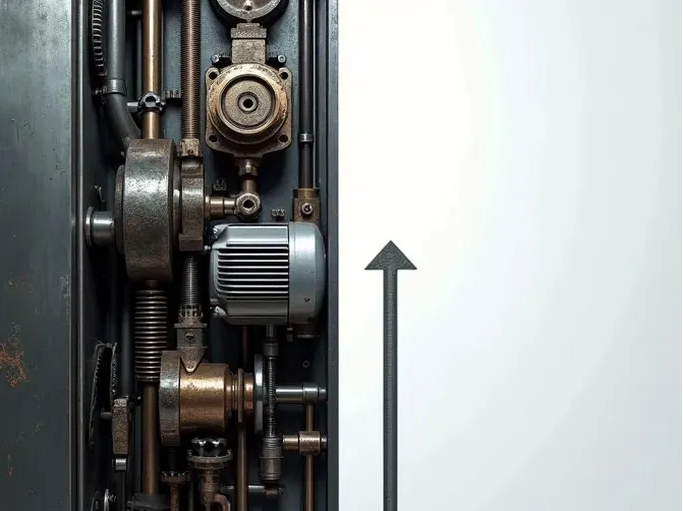
As urbanization accelerates and building technologies evolve, elevators have become indispensable vertical transportation solutions in modern architecture. The choice of elevator technology directly impacts a building's operational efficiency, maintenance costs, safety standards, and user experience. This report provides a comprehensive comparison between conventional traction elevators and machine-room-less (MRL) traction elevators to assist architects, developers, property managers, and investors in making informed decisions.
Traction elevators utilize friction between steel ropes or belts and drive sheaves to move the cab vertically. The system operates on pulley mechanics and counterweight balance, where an electric motor drives the sheave to move the ropes/belts, thereby lifting or lowering the cab.
Cab: Passenger/goods compartment with metal frame, walls, doors, lighting, and ventilation
Counterweight: Balances cab weight to reduce motor power requirements
Traction Machine: Drive unit containing motor, gearbox, and brake system
Control System: Electronic components managing operation and safety protocols
Suspension Media: Steel ropes or polyurethane-coated belts
Guide Rails: Precision tracks ensuring smooth vertical movement
Safety Systems: Overspeed governors, safety gears, buffers, and door protection devices
Call registration via hall buttons or touch panels
Control system processes destination requests
Traction motor engages drive sheave
Precision deceleration at target floor
Door operation sequence
Modern traction elevators incorporate multiple redundant safety systems including:
Overspeed governors with mechanical triggering
Progressive safety gears for emergency braking
Energy-absorbing buffers at pit level
Infrared door protection systems
Emergency communication systems
Backup power systems for controlled evacuation
Traditional systems house all drive equipment in a dedicated machine room, typically located above the hoistway.
Key elements include reinforced concrete/steel hoistway, top-mounted machine room, and full-height guide rails. The separate machine room accommodates all drive components and control equipment.
Proven reliability through decades of refinement
Superior maintenance accessibility
Higher load capacities (up to 5,000 kg)
Faster speeds (exceeding 10 m/s)
Extended service life (25+ years)
Requires dedicated machine room space
Structural reinforcement needs for vibration control
Longer installation timelines
Higher energy consumption
Best suited for high-rise commercial towers, heavy-traffic public buildings, and facilities requiring maximum reliability such as hospitals and transportation hubs.
MRL systems integrate drive components within the hoistway or adjacent spaces, eliminating the need for separate machine rooms.
Top-of-hoistway mounted machines
Side-mounted traction units
Distributed control cabinets
8-12% increased usable floor area
15-20% reduction in construction costs
Greater architectural flexibility
Shorter installation periods
Improved energy efficiency (up to 30% savings)
Reduced maintenance accessibility
Lower maximum capacities (typically under 1,600 kg)
Slower operational speeds (generally below 1.75 m/s)
Thermal management requirements
Ideal for mid-rise residential buildings, space-constrained retrofits, and projects prioritizing cost efficiency and sustainability.
MRL systems provide clear advantages by eliminating machine room requirements, particularly valuable in projects where every square meter counts.
While MRL elevators install faster, conventional systems offer superior long-term maintenance accessibility - a critical factor for high-usage environments.
Modern MRL systems typically incorporate regenerative drives and advanced control algorithms, achieving superior energy performance compared to traditional configurations.
MRL solutions demonstrate lower total cost of ownership through reduced construction expenses and operational savings, though conventional systems may prove more economical for ultra-high-capacity applications.
Both configurations meet stringent global safety standards, though conventional systems benefit from easier inspection access to critical components.
Traditional traction elevators remain unchallenged for high-speed, heavy-load applications, while MRL systems dominate the mid-range performance segment.
Choose Conventional Traction When:
- Building exceeds 20 floors
- Daily traffic exceeds 1,000 passengers
- Load requirements surpass 2,000 kg
- Speeds above 2.5 m/s are necessary
Opt for MRL Systems When:
- Construction height is under 15 floors
- Space optimization is critical
- Budget constraints exist
- Sustainability goals are prioritized
Emerging innovations include:
AI-driven predictive maintenance systems
Regenerative energy recovery technologies
Advanced materials for suspension systems
IoT-enabled remote monitoring
Destination dispatch optimization algorithms
latest company news
Mail Us


-
About
-
Screw Driven Elevator
-
Small Residential Elevator
-
Follow Us
Binhe Industrial Park, Huihe Street, Jiyang District, Jinan, Shandong, China
+8618654341166
ystelevator@yeah.net
-
Mail Us
China Good Quality Screw Driven Elevator Supplier. © 2025 - 2026 Shandong YST Elevator Co., Ltd.. All Rights Reserved.
