Demand Rises for Residential Elevators in Threestory Homes

 English
 Español
 简体中文
简体中文
 Русский
 Árabe
Árabe
 Français
 Deutsch
 Português
 日本語
日本語
 한국어
한국어
 हिंदी
हिंदी
 Prancis
 Türkçe
 Tiếng Việt
 Italiano
 ไทย
ไทย
Demand Rises for Residential Elevators in Threestory Homes
July 22, 2026
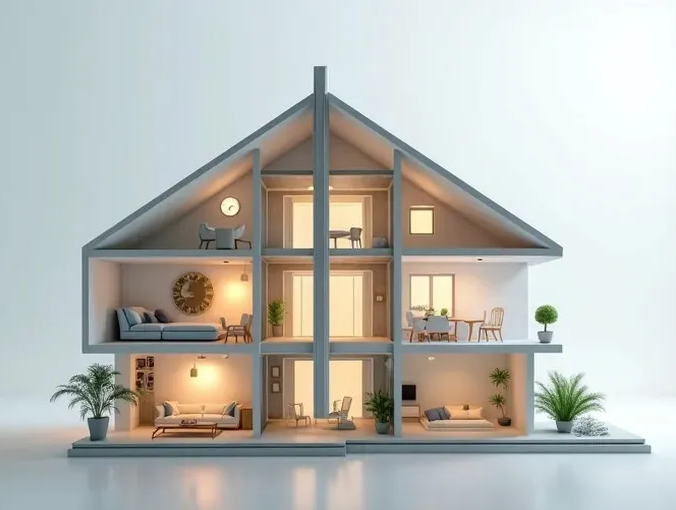
Imagine elderly parents struggling to climb three flights of stairs, or returning from grocery shopping burdened with heavy bags—these scenarios might make homeowners consider installing a residential elevator. As an increasingly popular solution for improving living standards, home elevators offer both convenience and added property value, particularly for three-story residences.
Residential elevators, designed specifically for private homes, differ from commercial models in specifications, functionality, and safety standards. Building codes typically regulate dimensions, weight capacity (usually under 400kg), and speed (below 0.4m/s), restricting use to household members and guests.
The market offers several elevator types with distinct characteristics:
Traction Elevators: Utilize steel cables for smooth, quiet operation with long lifespan, but require dedicated machine rooms and higher installation costs.
Hydraulic Elevators: Powered by hydraulic pumps, these space-efficient models have simpler installation and lower costs, though with slower speeds and more noise.
Screw-Driven Elevators: Compact and safe without requiring pits, but have limited capacity and higher price points.
Machine-Room-Less (MRL) Elevators: Direct-drive systems offering space-saving solutions with reduced comfort and safety levels, suitable for extremely constrained spaces.
Installing elevators in three-story residences provides multiple advantages:
Enhanced accessibility for seniors, children, and mobility-impaired individuals
Increased property valuation and market appeal
Simplified transportation of heavy items and furniture
Distinctive architectural feature
Key installation considerations include:
Available space and structural compatibility
Budget for purchase, installation, and maintenance
Safety certifications and noise reduction measures
When choosing residential elevators, evaluate:
Type suitability based on spatial constraints and budget
Appropriate dimensions and capacity (300kg for 2-3 persons; 400kg for 4-5)
Safety features including emergency stops and overload protection
Comfort factors like noise levels and cabin design
Manufacturer's maintenance and service provisions
Professional installation involves:
Site assessment for positioning and structural requirements
Customized system design
Construction of shafts, pits, and machine rooms
Equipment assembly and safety testing
Commissioning and final inspection
Regular upkeep includes:
Component inspections and lubrication
Cabin and shaft cleaning
Replacement of wear components
Annual professional evaluations
Financial considerations encompass:
Unit cost varying by type (hydraulic models typically most affordable)
Installation expenses dependent on structural modifications
Annual maintenance ranging from several thousand to ten thousand units
Operational electricity consumption
Industry trends indicate advancement toward:
Smart operation via mobile apps and voice control
Energy-efficient drive systems and lighting
Customizable design options
Enhanced safety technologies
As demographic shifts increase demand for accessible housing solutions, residential elevators present a viable option for enhancing living standards in multi-story homes through improved mobility and property value.
latest company news
Mail Us



-
About
-
Screw Driven Elevator
-
Small Residential Elevator
-
Follow Us
Binhe Industrial Park, Huihe Street, Jiyang District, Jinan, Shandong, China
+8618654341166
ystelevator@yeah.net
-
Mail Us
China Good Quality Screw Driven Elevator Supplier. © 2025 - 2026 Shandong YST Elevator Co., Ltd.. All Rights Reserved.
