Geared Vs Gearless Elevators Key Technical Differences Explained

 English
 Español
 简体中文
简体中文
 Русский
 Árabe
Árabe
 Français
 Deutsch
 Português
 日本語
日本語
 한국어
한국어
 हिंदी
हिंदी
 Prancis
 Türkçe
 Tiếng Việt
 Italiano
 ไทย
ไทย
Geared Vs Gearless Elevators Key Technical Differences Explained
January 20, 2026
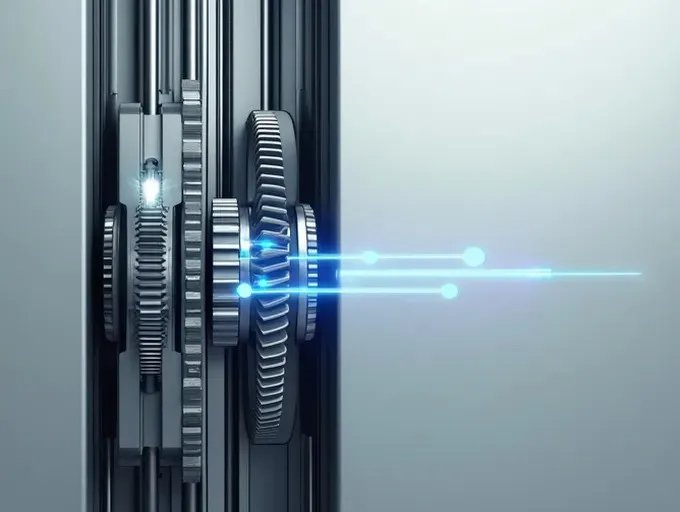
Elevators, as indispensable vertical transportation in modern architecture, have undergone a remarkable technological evolution. From ancient lifting devices to today's intelligent, high-speed systems, each innovation has profoundly impacted building design and urban living. Among various elevator types, traction elevators dominate the market due to their reliability and efficiency, with the choice between geared and gearless systems remaining a critical consideration for architects, engineers, and building owners.
The concept of elevators dates back to antiquity. As early as the 3rd century BC, Archimedes invented a hoisting device using pulleys and ropes—considered the precursor to modern elevators. However, the true modern elevator emerged through American inventor Elisha Otis. In 1853, Otis demonstrated his safety elevator at the New York World's Fair, featuring a revolutionary braking system that would engage automatically if the cables failed, dramatically improving safety and enabling widespread adoption. Otis thus earned the title "father of the elevator." Early Otis elevators used steam power, later replaced by hydraulic and electric systems. The first electric elevators predominantly employed geared mechanisms, using gearboxes to reduce motor speed while increasing torque.
Traction elevators represent the most widely used elevator type today. Their fundamental principle relies on friction between steel ropes and a drive sheave to move the cab. Key components include:
Cab: The compartment transporting passengers or goods
Counterweight: Balances the cab's weight to reduce motor load
Drive sheave: The grooved wheel that moves the ropes, typically motor-driven
Steel ropes: Connect the cab and counterweight, transmitting traction force
Guide rails: Direct vertical movement of cab and counterweight
Safety systems: Including overspeed governors, safety gears, and buffers
Based on the drive mechanism, traction elevators divide into geared and gearless systems.
Geared systems connect the motor to the drive sheave through a gearbox, which reduces speed while increasing torque. This mature technology offers cost advantages for mid-range applications.
The high-speed motor drives the gearbox, which transmits reduced-speed, increased-torque rotation to the sheave. Ropes wrapped around the sheave move the cab and counterweight in opposite directions.
Lower initial cost: More economical manufacturing and installation
Proven technology: Reliable performance with straightforward maintenance
Broad applicability: Suitable for low-to-mid rise buildings
Higher energy consumption: Gearbox friction increases power usage
Noise generation: Gear meshing produces audible vibration
Maintenance requirements: Regular gearbox lubrication and inspection needed
Speed constraints: Typically limited to ≤2.5 m/s
Gearless (direct-drive) systems couple the motor directly to the sheave, typically using permanent magnet synchronous motors (PMSM). This configuration excels in high-speed, high-capacity applications, particularly in tall buildings.
The PMSM directly rotates the sheave, moving the ropes without intermediate gearing. This eliminates energy losses and reduces noise.
Energy efficiency: 20-40% lower power consumption than geared systems
Quiet operation: Absence of gear noise improves ride quality
Reduced maintenance: No gearbox lubrication requirements
High speed: Capable of ≥10 m/s operation
Longevity: Simplified mechanical design enhances reliability
Higher capital cost: More expensive components and installation
Technical complexity: Demands advanced motor control systems
Space requirements: Larger motors may need bigger machine rooms
Key performance metrics distinguish these systems:
Efficiency: Gearless (≥95%) outperforms geared (80-90%)
Noise levels: Gearless maintains ≤50 dB vs. geared 60-70 dB
Precision: Gearless offers superior leveling accuracy
Vibration: Gearless systems produce less mechanical oscillation
Control systems: Gearless typically employs advanced vector or direct torque control
Machine room: Some gearless models enable machine-room-less (MRL) designs
Total cost: While gearless has higher initial cost, lifetime expenses may be lower
Choosing between systems requires evaluating:
Building height: Gearless preferred for high-rises
Capacity needs: Gearless handles heavier loads more efficiently
Speed requirements: Gearless enables faster travel times
Energy considerations: Gearless suits green building projects
Acoustic environment: Gearless benefits noise-sensitive applications
Budget constraints: Geared offers lower upfront costs
Space limitations: MRL gearless models save architectural space
Prioritize quiet operation and comfort, favoring gearless systems with enhanced safety features.
Require precise leveling and smooth operation, with easy-to-clean surfaces.
Demand robust construction with impact-resistant materials, regardless of drive type.
Benefit from gearless smoothness combined with panoramic cab designs.
Emerging trends focus on:
Smart technologies: AI-driven predictive maintenance and IoT connectivity
Sustainability: Regenerative drives and energy-efficient components
User experience: Enhanced accessibility and intuitive interfaces
As manufacturing costs decrease, gearless systems are expanding into broader market segments, while continuous innovation promises smarter, greener vertical mobility solutions for future cities.
latest company news
Mail Us


-
About
-
Screw Driven Elevator
-
Small Residential Elevator
-
Follow Us
Binhe Industrial Park, Huihe Street, Jiyang District, Jinan, Shandong, China
+8618654341166
ystelevator@yeah.net
-
Mail Us
China Good Quality Screw Driven Elevator Supplier. © 2025 - 2026 Shandong YST Elevator Co., Ltd.. All Rights Reserved.
