 English
 Español
Drawing capability
Can the supplier mark the offered configuration and revision? Can it state which information is project-specific instead of leaving the buyer to infer it?

Categories
Contacts
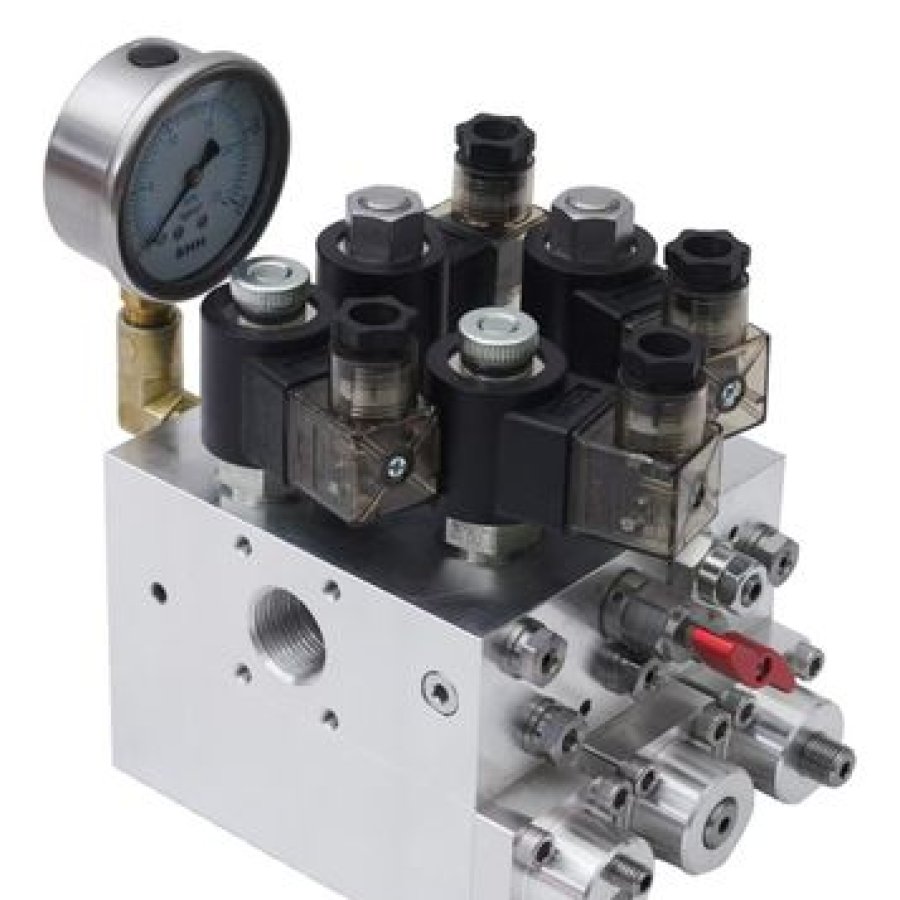
Valve Block Assembly for Elevator Pump Stations | Replace or Repair
Product Details:
Brand Name
YST
Model Number
YSTV-001
Certification
CE, ISO
Place of Origin
China
Payment & Shipping Terms:
Minimum Order Quantity
1
Price
USD 300-600/set
Payment Terms
LC TT
Supply Ability
1,000/month
Delivery Time
10 days
Packaging Details
Export non-fumigation
Product Description
This page is for buyers who need to identify, quote, repair or replace an integrated hydraulic control assembly on an elevator pump station. It starts with the information that controls fit, not with the outside shape of the old unit.
Engineering boundary: port size, pressure rating, flow capacity, material grade, coil voltage and approved pump-unit combinations are not published in the current product table. They must be confirmed against the approved drawing and quotation before an order is released.
FIRST DECISION
The same photograph can lead to three different conversations. A new pump-station builder needs an assembly that fits a planned circuit. A maintenance team needs a replacement that matches an existing interface. A service department may only need to repair or identify one part. Mixing those jobs produces vague quotations and expensive mistakes.
Send the hydraulic drawing, port markings, photographs of the complete valve group and the control-panel details. Compare those records with the quotation before approving a substitute.
A photograph shows the shape of the housing and where the coils sit. It rarely proves the internal route of oil, the function of each cartridge, the pressure setting or the material of the seals. A pump-station drawing or the original assembly drawing can show those points together. When the drawing is missing, mark the missing information as a project risk instead of treating visual similarity as proof.
Maintenance teams often inherit a panel label, an old purchase order or a note saying “same as before.” Those records are useful, but they are not interchangeable with a revision number. Record the complete label, the plant asset number, the date of the last change and any superseded part references. A small revision can alter a seal, a coil or a service passage while leaving the housing unchanged.
“Compatible” should not be an assurance made from the outside dimensions alone. The useful answer states which circuit functions are matched, which interfaces are known and which items still require confirmation. That form of answer protects both the buyer and the supplier. It also makes a later service decision easier because the evidence travels with the equipment.
Do not accept an assembly model as a replacement until the circuit, coil control, mechanical envelope and service access have been compared as one package.
IDENTIFICATION
A valve block assembly may remain in service for many years while the people who installed it move on. The identification record is therefore part of the product, not an administrative extra. It should let a later technician find the same drawing, understand the control logic and order the right service item without relying on memory.
Photograph the label straight on and from an angle that shows its raised or printed characters. Include the surrounding housing so a later reader can see which surface carried the label. If a character is worn away, record the uncertainty. A guessed digit or suffix can turn a service inquiry into the wrong assembly discussion.
The assembly record should reserve a field for hydraulic ports, electrical connections, mechanical mounting, manual service access and the relationship to the pump and cylinder. Each family can be incomplete at first. The practical point is that the buyer and supplier use the same list, rather than allowing one side to assume the other has checked a hidden detail.
In everyday conversation, “valve block” may describe the whole hydraulic control group. A service request may then mean one cartridge, one coil, a seal set or the complete assembly. Write the unit of supply explicitly. A quotation for a complete integrated assembly should not be compared with a quotation for a single replacement part as if they were the same scope.
Place a scale or a known object beside the assembly when dimensions matter. Photograph the mounting points, the service clearance around the manual valve and the full route of hoses where possible. A close-up of a connector without a reference view may show the connector but not where it sits or how much space a technician has to reach it.
Drawings can change without a change to the sales title. Ask which revision was used for the quotation and keep a copy with the purchase record. If a replacement is later ordered, the new quotation should state whether it follows that drawing, a newer revision or a new configuration. The answer may be acceptable in either case, but it must be visible.
A practical history includes the last inspection, any change to pressure settings, replacement coils, seal work, oil condition and the reason for the last shutdown. This information helps distinguish a tired assembly from a system fault elsewhere. It also stops a replacement discussion from starting at zero every time a symptom returns.
For the broader component role and the hydraulic circuit background, use the hydraulic valve block for elevator pump stations page. This page stays focused on the assembly-level buyer decision.
ASSEMBLY MAP
The current product description presents an integrated assembly rather than a loose collection of valves. Solenoid directional valves, pressure regulation, relief protection and a pressure gauge are arranged around one housing. A manual shut-off valve adds a defined isolation point for service. The exact internal configuration remains model and drawing specific.
Directs oil to support the commanded movement or return it along the circuit route. Coil voltage, connector type, manual operation and control signal must be confirmed for the actual configuration.
Educational illustration only. It is not a hydraulic schematic for a particular building and does not replace the approved drawing supplied with the quotation.
An integrated housing can reduce the number of separate fittings and exposed joints. That arrangement may simplify assembly and create a cleaner service envelope, but it also concentrates responsibility. The buyer must keep the function map and the supplier must identify the configuration that matches it. A clean outside does not remove the need to check the inside route.
The current page lists pressure regulation and relief functions, but it does not publish a setting. Do not copy a pressure from another building, another model or a photograph of a gauge. The working pressure and protection setting belong to the engineered system and should be delivered with the approved specification.
A manual shut-off valve is useful only if the technician can reach it, identify its position and follow the agreed isolation procedure. Include the access direction in the drawing review. The same principle applies to coil connectors, gauge visibility and the space needed to remove a service item without stressing adjacent pipework.
CONTROL LOGIC
A buyer does not need a full schematic to understand the control task. Three states provide a useful review. In Lift, the pump supplies oil and the directional path must support controlled upward movement. In Hold, the assembly must maintain a defined stopped condition under the approved system logic. In Lower, oil returns along the designed path while the control valve manages the movement.
The review looks for a defined isolation or holding condition, correct valve state and a documented service boundary. It does not assume that a visible valve position proves a safe state.
The supplier needs to know what oil flow the pump provides, which route supports the cylinder and what control signal opens the path. The current product data does not publish flow capacity or port size. A quotation therefore needs to state the basis of selection, not just repeat a model name.
A stopped car is not evidence that every hydraulic component is isolated. The maintenance procedure should define the safe state, the location of the manual shut-off, the pressure-release step and who is authorised to verify it. This page supplies purchasing context, not a site work instruction.
The return path, regulating function and protection arrangement must agree with the approved circuit. If the old symptom is “the car lowers too quickly,” replacing the whole assembly without checking the cylinder, oil condition, control signal and gauge reading can leave the real fault untouched.
Use the three-state view to prepare a focused review: Which route changes? Which component receives the command? What reading is expected at the gauge? What evidence proves isolation? Which drawing version controls the answer? These questions are more useful than a generic list of features because they lead to the documents a supplier can actually verify.
REPAIR OR REPLACE
Repair and replacement are different procurement decisions. An elevator valve replacement request may concern one failed service item, or it may require the complete assembly. A repair decision asks whether an identified item can be restored without changing the controlled interface. A replacement decision asks whether a complete assembly can match the circuit and installation envelope. The distinction matters because a low-priced part is not useful if the real defect sits elsewhere, and a new assembly is wasteful if a documented service item can solve the problem.
Use this path when the housing, internal route or function map cannot be established, when the service item is unavailable, or when the supplier and responsible engineer agree that the complete unit must be replaced.
| Question | Repair path | Replace path | Decision evidence |
|---|---|---|---|
| Can the failed item be identified? | Known cartridge, coil, seal or service item | Identity or internal route remains uncertain | Assembly drawing, service record, close-up photographs |
| Does the controlled interface change? | No change after fit and function checks | Ports, mounting, control or pressure logic may change | Interface comparison and revision record |
| Can the system be safely isolated? | Approved isolation and pressure-release method | Replacement procedure approved for the site | Method statement and responsible engineer |
| Is a compatible service item available? | Part reference and evidence are available | Complete configuration can be quoted from the drawing | Supplier data sheet and quotation basis |
| What is the proof of success? | Defined function test after repair | Approved commissioning record for the new assembly | Test record, readings and sign-off |
A drifting car, slow descent, noisy pump or oily housing can each point to more than one part of the hydraulic system. The assembly is a convenient suspect because it is visible, but it may be the victim of contamination, incorrect control signals or an unrelated cylinder issue. First record the symptom and the conditions in which it occurs. Then map those observations to the circuit before choosing the intervention.
A repair path should state which control functions remain untouched, how the sealing surfaces are protected and how the function is verified afterwards. It should not imply that any internal part can be changed without matching the original configuration. If the required service item lacks a revision or compatibility record, stop and resolve that gap.
A new assembly can restore known documentation and remove uncertainty from an unknown unit. It can also introduce a different pressure setting, coil connector or mounting envelope. The value comes from a controlled replacement, not from the word “new.” Compare the offered assembly with the pump, cylinder, control panel and service plan before accepting an upgrade claim.
Record who owns the diagnosis, who owns the hydraulic design, who confirms the replacement envelope and who signs the return-to-service check. A short responsibility record is especially useful when a repair contractor, an elevator service provider and a component supplier are different organisations.
Do not approve a replacement from a photograph alone, and do not treat a supplier catalogue image as proof of an internal valve route.
COMPATIBILITY REVIEW
Use this checklist before asking for a replacement price. It is not an instruction to complete a hydraulic design yourself. It is a way to organise the information that the buyer, service provider and supplier must exchange. Tick only items supported by a drawing, photograph, label or approved document.
0 of 12 confirmed
The assembly can match the mounting holes and still fail the control review. It can match the coil voltage and still obstruct the service access. It can fit the pipework and still reference the wrong drawing. Treat the chain as complete only when every safety and function dependency has an owner.
If the same supplier previously supplied the installed assembly, ask for the original configuration record. Do not accept a remembered “we made that one” as proof. A historical supply can greatly shorten the review, but it still needs a link to the drawing, serial or order record.
A useful first package includes the assembly photographs, label, circuit drawing, pump and cylinder arrangement, control data and the reason for replacement. If only the reason is available, ask for a non-binding review. The quotation should clearly state what remains unconfirmed.
Replacement work often happens in a space that was not designed for access. Include the route for lifting or moving the assembly, the clearance for hoses and connectors and the surface on which the technician will work. Shipping a correct assembly into an inaccessible enclosure is still a project failure.
“Please quote against the attached drawing and mark every interface that remains unconfirmed. Do not infer missing pressure, flow, port or coil data.”
REPLACEMENT FLOW
The sequence below is a procurement and documentation flow. It does not replace the site-specific work method, isolation procedure or competent-person requirements of the elevator maintenance provider.
Capture the assembly, label, circuit, control details, service symptom and approved drawing revision. Mark missing evidence before asking for a replacement price.
The comparison stage should connect the record to the offered configuration. Ask which functions are identical and which are new. If a function changes, the effect on the pump, cylinder, controls and approval path should be stated in writing.
A useful quotation identifies the offered assembly, the drawing and revision used, the commercial terms and the buyer information still required. It should not leave the final configuration implied by a photograph.
The order should freeze the configuration that both sides reviewed. Any later change to a coil, port, pressure function or label should create a new comparison. This prevents a nominal delivery date from hiding an unresolved interchangeability risk.
Keep the packing record, replacement assembly identification, removal notes and any observations made during installation. A photograph of the final installation can be useful, but it is not a substitute for the approved drawing or the commissioning result.
The maintenance file should show the old assembly, the new assembly, the reason for change, the approved function checks and the documents handed to the site. This record makes the next service inquiry faster and reduces the chance that a future technician treats the assembly as an unknown part.
INSTALLATION BOUNDARY
An assembly cannot be installed safely from a marketing description. The buyer owns the building, the pump-station design, the control integration and the local approval process. The supplier owns the configuration it offers and the data attached to that configuration. The responsible elevator engineer owns the combined system check. Keep those roles explicit.
| Interface | Information to exchange | Responsible owner | Evidence at handover |
|---|---|---|---|
| Hydraulic circuit | Pump, cylinder, route and required control functions | Project hydraulic designer | Approved circuit drawing and revision |
| Mechanical envelope | Mounting, access and pipework clearance | Buyer or project installer | Measured drawing and installation photographs |
| Electrical control | Coil data, connector, signal and manual function | Control-panel designer | Electrical schedule and configuration record |
| Product configuration | Offered assembly identity and supplied functions | Component supplier | Quotation, drawing, label and packing record |
| Repair and inspection | Isolation, pressure release and return-to-service checks | Competent maintenance provider | Signed method and commissioning record |
A technician will need to identify the label, reach the manual shut-off, observe the gauge and inspect vulnerable connections. If any of those tasks requires dismantling surrounding equipment, that requirement belongs in the project review. Purchase price is not the only cost of a poor access decision.
The product supplier may provide a component configuration drawing. The project engineer should hold the complete system drawing and approval record. Combining them into one document without version control can create ambiguity about which party approved the relationship between the parts.
Before shipment, confirm the assembly label, drawing revision, quantity, commercial terms, packaging and any agreed documentation. The current product table lists export non-fumigation packaging. Confirm the final packing method on the quotation when the shipment method or destination requires a different arrangement.
This page can help a buyer ask better questions. It cannot know the isolation point of a particular pump station, the local lockout procedure or the required pressure setting. Those belong to the site documents and the responsible maintenance organisation.
Can a new technician identify this assembly, isolate it and find its approved drawing without calling the person who ordered it?
VERIFICATION
Commissioning records are easier to trust when each observation answers one question. Use the approved site procedure as the authority and keep the assembly identity beside the observation. A pressure value without the corresponding pump state, control demand and circuit condition is difficult to interpret later.
Record the reading together with the command state, temperature and approved reference. A gauge is one data point, not a diagnosis by itself.
A sudden change in movement may involve the pump, the assembly, the cylinder or the control signal. A leak may originate at a fitting, a seal or a service item. Keep the observation factual: what happened, when, under which command, what changed and what evidence was collected. Then compare it with the approved diagnostic process.
The current product page does not publish a pressure setting. Use the approved system data and the commissioning method. Record the gauge location and state whether the reading was taken during lift, hold or lower. A reading copied from another page or guessed from the assembly model is not a reliable reference.
Photograph the assembly label, cable retention, service clearance and final hose route. Measurements and approved readings still belong in the written record. A photograph can show that a connector exists; it cannot prove the coil voltage or the control logic.
Attach the supplier configuration, site checks, responsibility record and final handover to the elevator maintenance file. Note any unresolved missing data. A transparent open item is safer than a record that appears complete because an assumption was written as fact.
SERVICE PLAN
The purchase does not end when the assembly is delivered. A serviceable installation needs a short list of items that can be identified from the assembly record: the label, the function map, the approved drawing, the coil and connector data, the service access, the fluid requirement and the contact path for a later inquiry. The current product page does not publish a maintenance interval. The service plan must therefore come from the approved system documentation and the responsible maintenance provider.
A coil, cartridge, seal or gauge that looks similar may have a different function, material or control rating. Record the item from the assembly drawing and the equipment label. When the item is not listed, ask the supplier and maintenance engineer to identify it. A guessed spare can be worse than no spare because it creates false confidence.
The fluid specification, cleanliness condition and any approved change belong in the same file as the assembly configuration. The current page notes that the housing and seal materials should be compared with the fluid supplier's recommendations for the actual project. A generic “hydraulic oil” description is not enough for a configuration review.
The assembly includes a manual shut-off function, but the page does not define a site isolation procedure. The maintenance organisation should identify the manual isolation point, confirm the pressure-release method and record the authorised sequence. Access to that point should be checked during installation, not discovered when a fault occurs.
A durable service folder can contain the assembly label photograph, the approved drawing, the quotation, the packing record, the control-panel data and the handover checks. If a later order references the same assembly, the supplier can compare the new quotation with the original configuration instead of starting from a photograph.
Agree which organisation receives a technical question, which organisation owns a site decision and what information should accompany a request. The useful first message states the assembly identity, the symptom, the available drawing and the desired commercial action. Clear routing reduces the risk that an urgent maintenance issue is handled as a generic catalogue enquiry.
For component-family context, see the existing hydraulic valve block page. For hydraulic system examples, use the machine-room-less hydraulic elevator, the large-cylinder sightseeing elevator, or the pitless single-phase hydraulic elevator page.
SUPPLIER REVIEW
Supplier selection is not a comparison of slogans. For a valve block assembly, the useful evidence is specific: an assembly drawing, a configuration record, a label convention, control details, quality checks and a clear commercial basis. A catalogue photograph may help start the conversation, but it cannot close an interchangeability review.
Use the label, drawing revision and order history to show which assembly is being offered. Replace verbal assurances with a document that can be attached to the quotation.
Can the supplier mark the offered configuration and revision? Can it state which information is project-specific instead of leaving the buyer to infer it?
Does the quotation list ports, mounting, electrical connection and manual access? Does it identify items that are not yet confirmed?
What product-level records support the offered assembly? Ask for the applicable document path without assuming that every certificate covers every configuration.
Can the supplier keep the reviewed configuration, quantity, packaging and delivery terms together? Is a change to the configuration handled as a new approval step?
Can a technician ask about a label, function or replacement item without needing the original salesperson? Is the model-level contact route clear?
Are MOQ, payment terms, supply ability and packaging stated plainly? Does the quote separate a component review from a complete system approval?
Do not compare a complete assembly quotation with a bare housing price. Do not compare a verified drawing-based offer with an entry containing only a picture and a model name. Align the unit of supply, the included functions and the documentation before comparing the numbers.
“ISO” and “CE” are useful leads, but a buyer should ask which standard, certificate number, issuing body, scope and validity apply. The current product table lists CE and ISO, so the page can state that the item is listed that way. That statement is not a substitute for the exact certificate review required by a specific project.
A supplier that clearly labels an unknown is easier to manage than one that fills every gap with a smooth sentence. A missing flow or pressure value should become an evidence request. A missing drawing revision should become a hold point. A missing control detail should become a responsibility outside the quotation.
COMPLIANCE FILE
The current product table lists Certification as CE, ISO and Place of Origin as China. This is the product-level statement visible on this page. It tells a buyer what to ask about. It does not decide whether every configuration and destination is compliant, because that conclusion depends on the application, the certificates and the local approval process.
Request a legible copy or an authorised reference for the certificate claimed in the quotation. Check the product naming, model coverage and any conditions. If the offered assembly is a special configuration, ask whether the certificate applies to that configuration or whether another review is needed.
A certificate file without a configuration record may describe a family or a manufacturing process rather than the exact item. Store the certificate reference with the assembly drawing and order number. The handover then shows why the document was selected and which product record it supported.
This page can list public product facts and explain a review process. The approved hydraulic design, electrical integration, isolation procedure and installation method belong to the project file. Do not use a web page as evidence that an assembly has been approved for a particular site.
PRICE AND DELIVERY
The current product table shows a price range of USD 300-600 per set. It also shows MOQ 1, payment terms LC TT, supply ability 1,000 per month, delivery time 10 days and export non-fumigation packaging. These are commercial starting points. A final price depends on the configuration and the evidence required for the order.
Based on the published per-set range and quantity. Reference only. Final configuration, freight, documents and taxes must be confirmed in the quotation.
Port configuration, internal function selection, coil and control details, housing treatment, seal and fluid compatibility, documentation, quantity and packing all can change the package. The current table does not publish those values, so the buyer should not assume that the lowest visible price applies to every assembly requirement.
A short nominal delivery time is useful only after the configuration and commercial approvals are complete. Record the date on which the drawing, quantity and terms were accepted. If the configuration changes, ask for a new delivery commitment rather than assuming the original date still applies.
LC TT is the published payment term. The order should also state who owns freight arrangements, how documents are delivered and which packing method is approved. For international shipment, confirm the destination requirements with the quotation and the freight provider.
Ask every supplier to show the same unit of supply and the same included documents. Compare the assembly configuration, evidence package and delivery terms beside the price. A lower entry that leaves the interfaces unresolved is not a like-for-like offer.
QUOTE BRIEF
A short, structured brief is more useful than a long message without drawings. Describe the project, the assembly identity, the problem, the required quantity and the documents available. If a value is unknown, say so. This gives the supplier a clear place to ask a follow-up question.
This generator only organises the information on this page. It does not submit a form or approve a product.
Name the drawing, revision and date in the brief. Attach a complete circuit view and a close photograph of the assembly. If the drawing is unavailable, say that the first stage is identification and list the evidence you can provide.
Write what the elevator does and what the maintenance team has observed. Do not turn the symptom into a fixed diagnosis unless an approved inspection supports it. A request for a replacement assembly may still need to be checked against the pump, cylinder and control signals.
“Pressure and flow values not available” is a useful sentence. It tells the supplier that the quotation must mark the gap rather than invent a value. The same applies to port dimensions, seal materials and the certificate scope.
BUYER QUESTIONS
It is an integrated hydraulic control assembly that organises directional control, pressure regulation, relief protection and service functions around one housing. The current product description also includes solenoid valves, a pressure gauge and a manual shut-off valve. The exact internal configuration must match the approved drawing.
No. Similar housing shape does not prove that the ports, internal routes, pressure setting, coil control or sealing materials match. Compare the drawing, label, circuit and mechanical envelope before approving a replacement.
No general compatibility claim is available from the current page. The assembly must be reviewed against the pump, cylinder, control panel, required functions and project documentation. Missing values must remain open until the responsible engineer confirms them.
Send photographs of the complete assembly and label, the hydraulic drawing and revision, pump and cylinder details, control-panel information, required quantity, reason for replacement and any approved commissioning data. Mark unknown items rather than guessing.
Repair is appropriate when the service item and its interface are clearly identified and the restoration can be verified. Replacement is appropriate when the assembly identity or internal configuration cannot be established, or when the responsible engineer approves a complete swap. The decision should be recorded with evidence.
No. The current product table does not publish those values. They must be taken from the approved specification or marked for confirmation. Do not use a generic figure from another assembly as a substitute.
The product table lists CE and ISO as certification values. For a project order, ask for the actual standard, certificate scope, issuing body and validity. Match those documents to the offered configuration and the destination requirements.
No. A photograph may show geometry and labels, but it does not show the full internal route or pressure logic. Use photographs with the approved drawing and interface data.
The page publishes a price range of USD 300-600 per set, but the exact included configuration must be confirmed in the quotation. Ports, coils, materials, documents, packing and delivery can affect the offer.
The current product table lists a minimum order quantity of one set. Confirm the final quantity and commercial terms in the quotation.
The current product table lists 10 days. The delivery commitment should start from an approved configuration, quantity and commercial basis, and should be restated if the configuration changes.
Keep the label, assembly model, drawing revision, order record, date of installation and final handover documents in the maintenance file. This lets a later technician identify the assembly without relying on memory.
“Lift valve block” is used in some English-language contexts as another way to describe the valve block in a lift system. It does not create a separate compatibility claim. The actual product identity and interface data still control the review.
Start with the label, complete photographs, control-panel details and the pump and cylinder arrangement. Ask for a non-binding identification review and keep every unresolved interface visible. Do not order a replacement on appearance alone.
Want to Know more details about this product
Similar Products



About
Screw Driven Elevator
Small Residential Elevator
Follow Us
Binhe Industrial Park, Huihe Street, Jiyang District, Jinan, Shandong, China
+8618654341166
[email protected]
Mail Us
China Good Quality Screw Driven Elevator Supplier. © 2025 - 2026 Shandong YST Elevator Co., Ltd.. All Rights Reserved.